A string of primary victories by DSA-backed candidates and other progressives—from New York to Michigan to Florida—is giving the Democratic left new leverage while putting its ambitious economic agenda back at the center of the party’s debate.
A string of primary victories by DSA-backed candidates and other progressives—from New York to Michigan to Florida—is giving the Democratic left new leverage while putting its ambitious economic agenda back at the center of the party’s debate.
It's been a good year so far for socialist and progressive candidates running for higher office. In a number of Democratic Party congressional primaries across the United States, candidates aligned with the Democratic Socialists of America (DSA) have scored victories against more moderate incumbents and establishment-backed opponents, as have nonsocialist fellow travelers like Abdul El-Sayed and Troy Jackson.
This article is from the November/December 2026 issue.
A bold set of economic policy proposals, like Medicare for All and universal childcare, have been central to this electoral wave. These demands go far beyond what most mainstream Democrats have been calling for in recent decades, though the prospects of passing them in the near future are uncertain.
A Left Wave
Beginning with Chris Rabb’s primary victory in Pennsylvania this May, DSA and its allies have channeled outrage at President Donald Trump and U.S.-Israel policy, as well as perceived failures of Democratic Party leadership, into a string of surprising victories at the ballot box. DSA is the nation’s largest socialist organization, boasting 120,000 members as of this summer, which engages in both electoral politics as well as political education and grassroots organizing of various kinds (including labor and tenant activism). The group, originally formed in the early 1980s, has seen its numbers explode in recent years, with membership growing in response to Senator Bernie Sanders’ presidential campaign in 2016, Trump’s election that year, and again during Sanders’ 2020 presidential run, as well as surprise victories by young socialist politicians like Mayor Zohran Mamdani and Congresswoman Alexandria Ocasio-Cortez.
Darializa Avila Chevalier during an interview on “Secretos CEO” on July 19, 2026. Credit: A LO CLARO and Indhira Báez, CC BY-SA 4.0 license
Rabb, a state representative, won his primary to replace the retiring congressman in Pennsylvania’s 3rd Congressional District with the backing of DSA and Ocasio-Cortez (D-NY). Because the district leans so heavily Democratic, he is almost assured of victory in the general election in November.
But DSA scored a bigger coup in elections in New York City the following month. There, candidates endorsed by the local DSA chapter and Mamdani overcame major spending by the Israel lobby and local Democratic machines to oust two incumbent congressmen and handily defeat outgoing Rep. Nydia Velázquez’s chosen successor.
In New York’s 10th Congressional District, former city Comptroller Brad Lander beat Representative Daniel Goldman, hammering him for his support for Israel; uptown, in the 13th District, anti-Immigration and Customs Enforcement (ICE) and pro-Palestine activist Darializa Avila Chevalier achieved an upset against five-term Rep. Adriano Espaillat; and in the 7th District, State Assembly Member Claire Valdez took down her Velázquez-endorsed opponent, Antonio Reynoso, in a massive landslide—despite the fact that most local progressive forces, including most local labor unions, had lined up behind him. (Avila Chevalier and Valdez, who are DSA members, received the local chapter’s endorsement; Lander did not, but all three were supported by Mamdani.) Like Rabb, all three nominees are expected to easily win their general election races.
Abdul El-Sayed meets voters at Michigan Technological University on October 22, 2025. Credit: Conlan Houston, CC BY-SA 4.0 license.
As I wrote at the time for the Rosa Luxemburg Foundation, “The wins show beyond a shadow of a doubt that socialists are an electoral force to be reckoned with—one that moderate Democrats ignore or attempt to marginalize at their peril.” More recent left-wing victories elsewhere in the country are further evidence for this argument.
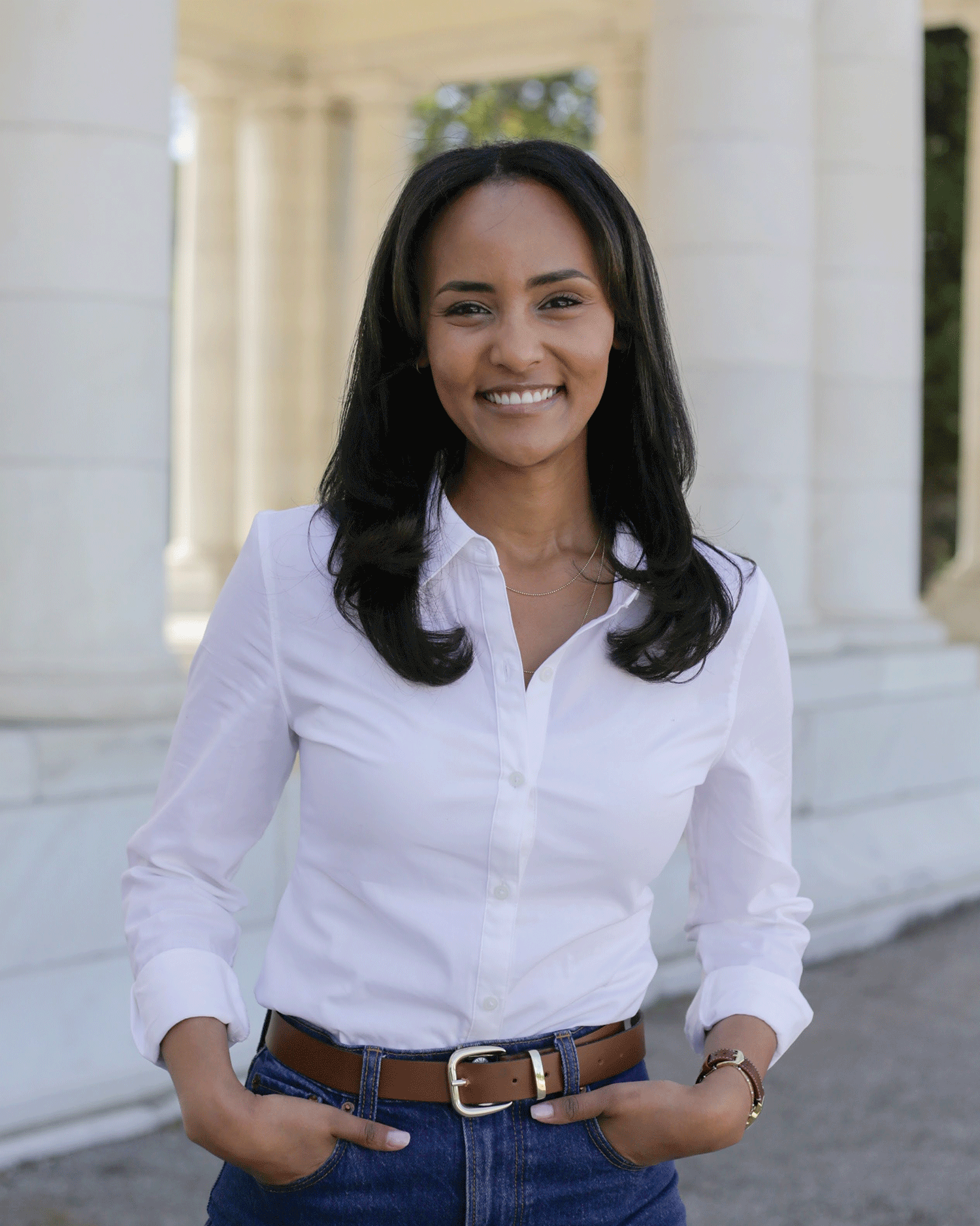
In Denver, Melat Kiros, backed by Sen. Sanders (I-VT) and DSA, bested the nearly 30-year incumbent Diana DeGette at the end of June. And in Detroit on August 4, DSA-endorsed State Rep. Donavan McKinney overcame incumbent Rep. Shri Thanedar, a former DSA member who had split with the group over his support for far-right Indian Prime Minister Narendra Modi and over U.S.-Israel policy. Both nominees are also predicted to prevail in November.
Meanwhile, a co-founder of the progressive climate organization the Sunrise Movement, William Lawrence, prevailed in his primary in Michigan’s 7th Congressional District against moderate opponents. Unlike McKinney and most successful DSA-endorsed candidates, he will likely face a competitive general election.
Perhaps the most significant victory for the broad left this cycle was Michigan’s statewide contest for the Democratic Senate nomination. El-Sayed, a longtime Medicare for All champion and outspoken Israel critic, narrowly beat establishment favorite Haley Stevens in that primary on August 4. Although El-Sayed has publicly disavowed “socialism” and was not endorsed by national DSA or local chapters, he received the backing of socialists Sen. Sanders and Rep. Rashida Tlaib (D-MI), as well as Ocasio-Cortez and other prominent progressives, and many DSA members volunteered for him. His campaign—centered on the slogan “Money out of politics, money in your pocket, Medicare for All”—has been seen as a sign of the Left’s growing electoral strength. On August 11, Peggy Flanagan, another non-DSA but Sanders-endorsed progressive, won the Democrats’ Senate nomination in Minnesota.
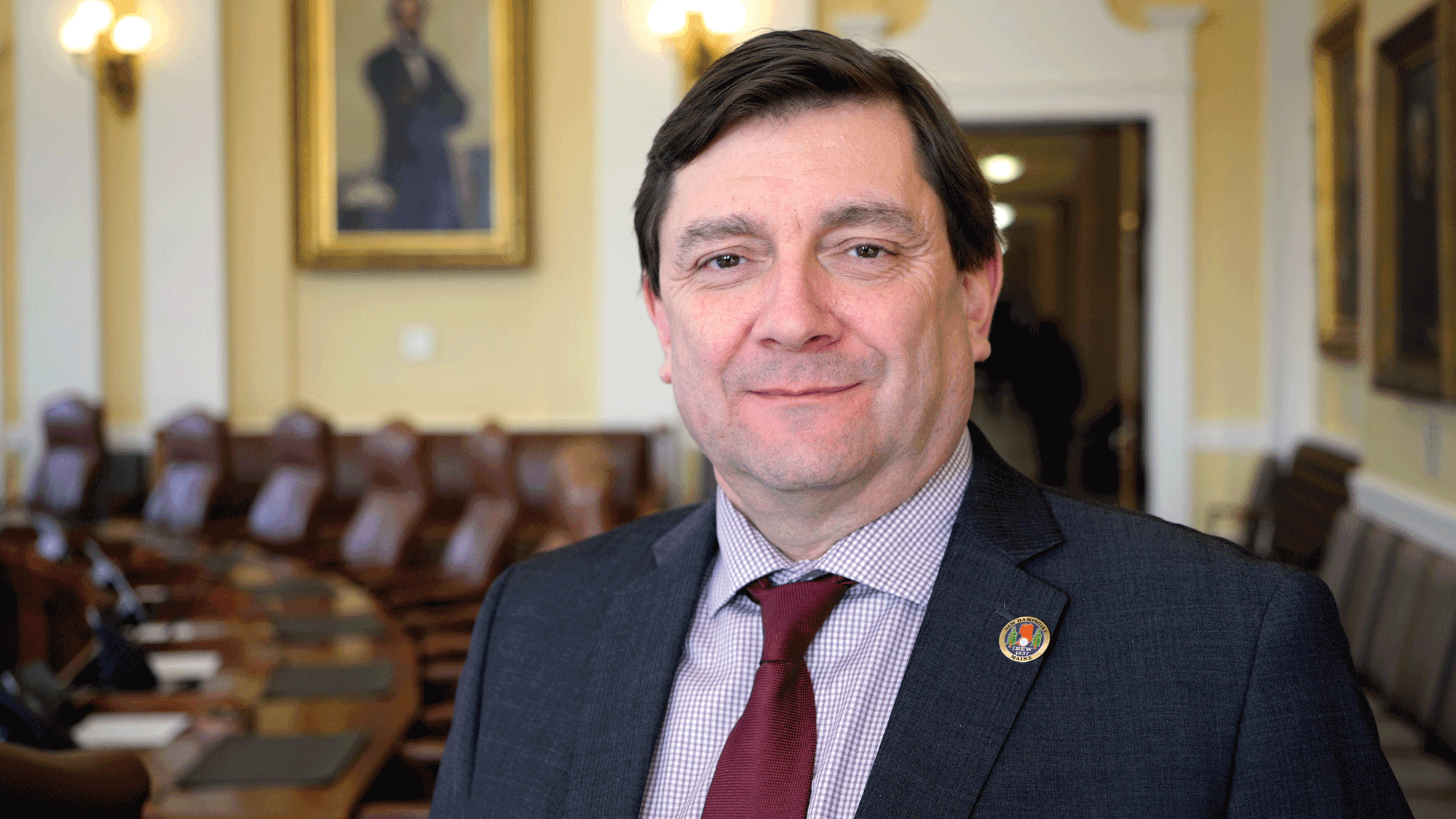
Former Maine Senate President Troy Jackson in the senate chamber, January 2, 2023. Credit: Aren LeBrun, CC0 1.0 dedication.
Anti-establishment forces can also claim a win in Maine’s Democratic Senate primary, though the road there has been rockier. Left-populist oysterman and U.S. Marine veteran Graham Platner first secured the nomination but dropped out of the race in July after facing increasingly dire personal scandals. Later that month, Troy Jackson won a hastily put-together nominating contest to replace Platner. Jackson is a former union logger and Maine State Senate leader with an impressive pro-worker track record. Like El-Sayed, he is not a socialist, but he has strong backing from the state’s labor movement and progressive forces; he was endorsed by Maine DSA during his unsuccessful campaign for the Democratic gubernatorial nomination earlier this year.
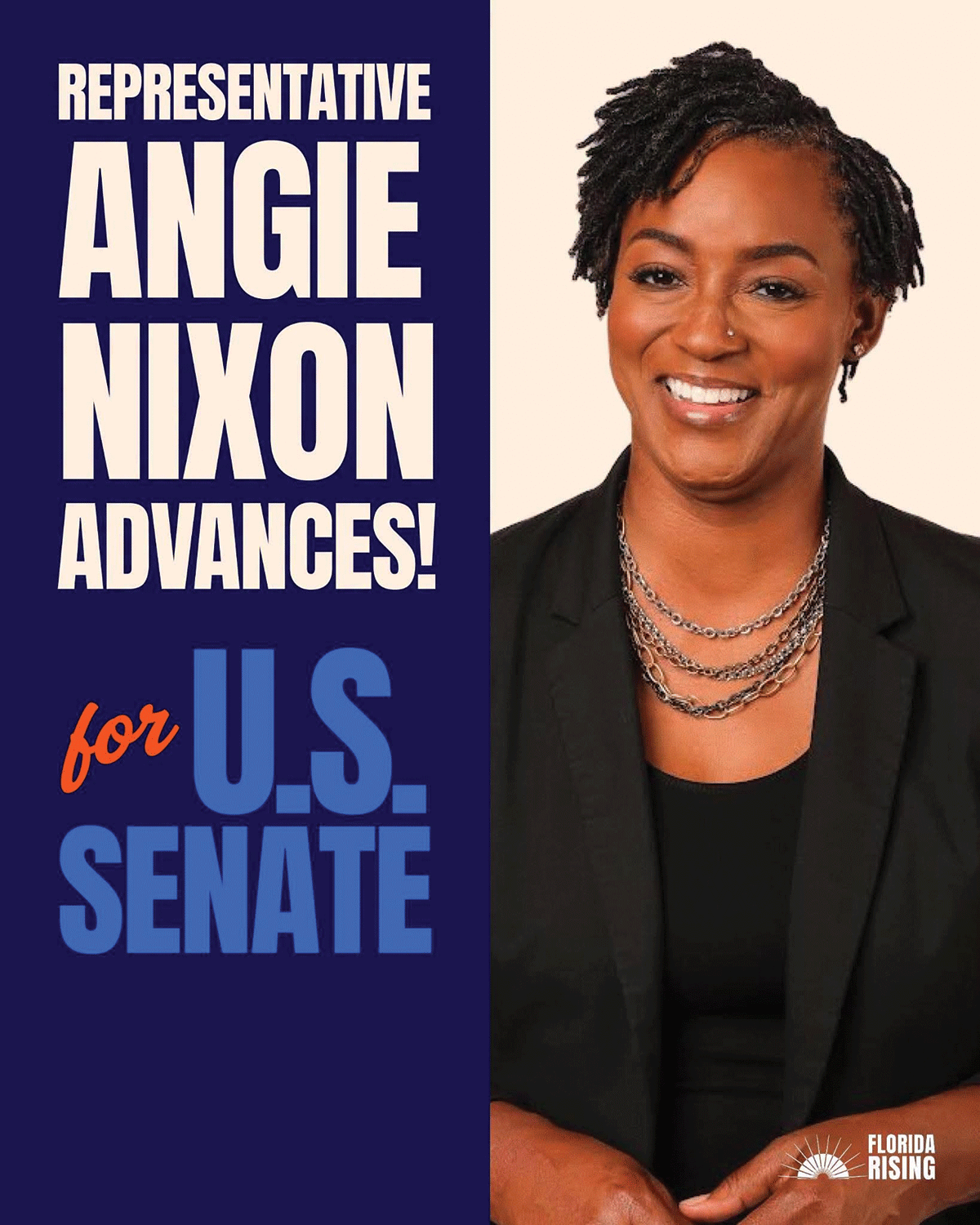
Finally, in a late-summer upset, DSA member Angie Nixon prevailed against her more moderate opponent’s major cash advantage to win the Democratic Senate nomination in Florida on August 18. Nixon wasn’t endorsed by DSA or its local chapters but was endorsed by Tlaib and fellow “Squad” member Rep. Ilhan Omar (D-MN), as well as a number of local unions and other progressive groups. In addition to congressional primary wins, socialists continued to grow their numbers in state and local legislatures across the country. That included a near-sweep of NYC–DSA-backed candidates in state-level races in New York in late June, where the group now boasts 16 members in the state legislature. They also won elections elsewhere throughout the country, as Branko Marcetic has reported for Jacobin, including in Michigan, Wisconsin, Minnesota, Connecticut, and Vermont.
DSA candidates’ victories in particular were driven to a large extent by the organization’s formidable grassroots door-knocking and phone-banking machine. This is especially true in New York City, where the country’s biggest chapter (with more than 15,000 members as of June) has the most developed electoral apparatus, and it can take a large amount of credit for the congressional wins this summer and Mamdani’s election last year. But this year’s gains in Philadelphia, Denver, and Detroit suggest that DSA is beginning to flex its muscle elsewhere. If past election cycles are any indication, these recent victories will help the organization expand even further.
Portrait of Melat Kiros at the Cheesman Park Pavilion in Denver, Col. on May 22, 2026. Credit: Andra Turner, CC BY-SA 4.0 license.
The summer wasn’t uniformly bright for the Left. In Wisconsin, socialist candidate for governor Francesca Hong narrowly lost in her much-watched August primary after holding double-digit leads in the polls in the final weeks. That surprise loss led to a string of headlines declaring that the Left’s momentum was spent. Socialists also went down to defeat in Missouri, where DSA-supported former Congresswoman Cori Bush hoped to regain the seat she lost to Wesley Bell in 2024; Bell beat her in a landslide. Long-shot DSA anti-Zionist candidate Oliver Adams Larkin lost by a large margin to centrist incumbent Democrat Jared Moskowitz in Florida’s strongly pro-Israel 25th House District. And Karishma Manzur, a DSA member who was not endorsed by the local chapter or national organization but who had former socialist Congressman Jamaal Bowman’s support, lost her race for U.S. Senate to pro-Israel U.S. Rep. Chris Pappas, who received substantial funding from the American Israel Public Affairs Committee.
The Left’s Economic Agenda
These victorious insurgent candidates have several important campaign themes in common. These include vocal criticism of the United States’ posture toward Israel and its ongoing genocide in Gaza, as noted above, as well as the Trump administration’s authoritarian immigration crackdown. In many races, socialist and progressive candidates successfully made hay out of their opponents’ shortcomings on these issues. But left-wing challengers have also been unified in their calls for ambitious progressive economic reforms, though their platforms differ in details and emphasis.
The biggest throughline in the left candidates’ economic priorities is probably Medicare for All, the demand for a single-payer health insurance system popularized by Sanders’ presidential campaigns in 2016 and 2020 that has since largely fallen out of the national conversation. Medicare for All has been central to the campaign of El-Sayed, who made his name as a champion of single-payer. (He has since received some criticism, however, for reconceiving of the policy as offering a public option rather than replacing private insurance plans wholesale; see Carl Beijer, “Is the Left Abandoning Medicare for All?” The People’s Line, August 12, 2026.)
The rest of the left candidates mentioned above are also running on Medicare for All. The demand is an increasingly urgent one, as prescription drug costs continue to spiral and more people are thrown off Medicaid rolls and struggle to afford health insurance, thanks to Trump’s budget cuts.
The call for universal childcare is another staple of these campaigns. (It was also a central component of Mamdani’s successful mayoral campaign last year. See Nick French, “Zohran Mamdani’s Bold Program for an Affordable New York City,” D&S, September/October 2025.) Other insurgents are either explicitly running on this plank or calling for expanding pre-K.
That’s no wonder, as the cost of childcare in the United States has grown truly exorbitant. According to the Economic Policy Institute, in New York State the average annual cost of infant care was $18,250, or $1,521 a month as of 2024. For comparison, that’s almost $10,000 more than the cost of one year of in-state tuition at one of New York’s four-year public colleges. In Michigan, the annual cost for infant care in 2024 was $10,536, or $878 a month, which would count for over 10% of the median family’s income. That is about two-thirds the cost of a year of in-state college tuition there.
Socialists and their fellow travelers propose to fund programs like Medicare for All and universal childcare in part through aggressively raising taxes on the rich. But another common point of emphasis is anti-militarism and the demand to redistribute federal spending from warmaking to social spending. In Avila Chevalier’s memorable phrase: “Babies, Not Bombs.” Her platform calls for an end to U.S. military aid to Israel, which now totals close to $4 billion per year, and an end to Trump’s disastrously expensive war on Iran, which has easily cost the Pentagon tens of billions of dollars. Other insurgent candidates are likewise calling for an end to military aid to Israel and to the Iran war.
Strong support for organized labor is another throughline. Valdez, a former worker-organizer in the United Auto Workers who was personally endorsed by UAW President Shawn Fain, gives particular emphasis to pro-union policy in her platform. She is calling for the passage of the PRO Act, which would make it easier for workers to unionize; an end to at-will employment; a four-day workweek; legalization of strikes for federal employees; and federal government support for new organizing drives.
Facebook ad for Angie Nixon produced by Florida Rising.
The Prospects for Reform
Many commentators and political insiders are expecting a “blue wave” in November, with Democrats trouncing Republicans in competitive congressional elections and even picking up seats that traditionally go for the GOP. In the best-case scenario for the Democratic Party, this would give it control of both the Senate and the House of Representatives.
Control of Congress would allow Democrats to seriously rein in Trump and block the worst of Republican policy measures, like the vicious upward redistribution of the One Big Beautiful Bill Act. (For analysis of the bill’s distributive effects, see John Miller, “No Matter How You Look at It, the Big Beautiful Bill is a Monstrosity,” Left Hook Economics, July 7, 2026.) But Trump’s veto power would probably prevent Democrats from passing much of their own positive legislation. If Democrats can hang onto Congress and win back the White House in 2028, however, then they would have an actual shot at advancing their own legislation to address our growing crises of inequality, affordability, and the climate.
The economic policy agenda being championed by the current crop of left-wing insurgents would be on the table. Yet, even at that point, socialists and progressives would face an uphill battle to push through reforms like Medicare for All or universal childcare. Much of the Democratic Party is indifferent or even hostile to such policies, and in the absence of a serious commitment by the president and party leaders to fighting for them, there is a good chance they will be killed by corporate-backed moderate holdouts—as happened with Joe Biden’s most ambitious initiatives, such as Build Back Better, his major social welfare expansion, and proposed increases in taxes on the wealthy. (For a fuller examination of Biden’s economic policy, see Nick French, “Assessing Bidenomics,” D&S, July/August 2024.)
It is nevertheless encouraging to see so many candidates for elected office raising the flag for these badly needed economic reforms. If the Left continues to build on its electoral momentum—and growing the grassroots forces that have powered recent wins—its odds of passing those policies will only improve.
Sources: Sam Janesch and Anna Orso, “State Rep. Chris Rabb wins Democratic primary for Philly congressional seat, a decisive win for the progressive left,” Philadelphia Inquirer, May 19, 2026 (inquirer.com); Michael Kruse, “Candidates Backed by Trump, Ocasio-Cortez Triumph in Key House Primaries,” New York Times, May 20, 2026 (nytimes.com); Nick French, “New York’s Democratic Socialists Flex Their Muscles,” Rosa Luxemburg Foundation NYC, June 25, 2026 (rosalux.nyc); Matthew Benninger, “Maurice ‘Mo’ Brown declares victory in Democratic Primary for NY Assembly District 129,” CNY Central, June 30, 2026 (cnycentral.com); Jesse Bedayn, “Democratic socialist Melat Kiros defeats longtime House incumbent in Colorado primary,” PBS News, July 1, 2026 (pbs.org); Christina Zhang, “Donavan McKinney defeats Shri Thanedar in Michigan’s 13th Congressional District primary,” CBS News, August 5, 2026 (cbsnews.com); Joey Cappelletti, “How Abdul El-Sayed went from political oblivion to progressive breakthrough in Michigan Senate race,” Associated Press, August 5, 2026 (apnews.com); Ana Faguy and Kayla Epstein, “Left-wing political outsider wins Democratic Senate primary in Michigan,” BBC, August 5, 2026 (bbc.com); Nate Cohn, “El-Sayed Got a Big Win for the Left. Can It Win Like This Nationally?” New York Times, August 5, 2026 (nytimes.com); Emma Davis, “Troy Jackson officially clinches Maine Democratic U.S. Senate nomination,” Maine Morning Star, July 25, 2026 (mainemorningstar.com); Branko Marcetic, “Troy Jackson’s Politics Are Rooted in Maine Logger Struggles,” Jacobin, July 15, 2026 (jacobin.com); “Maine Democrats Select Troy Jackson to Replace Graham Platner as U.S. Senate Candidate,” Democracy Now!, July 27, 2026; Branko Marcetic, “Yes, the Left Won Big Last Night,” Jacobin, August 5, 2026 (jacobin.com); Branko Marcetic, “The Socialist Electoral Project Still Hasn’t Hit Its Ceiling,” Jacobin, August 12, 2026 (jacobin.com); Carl Beijer, “Is the left abandoning Medicare for All?” The People’s Line, August 12, 2026 (peoplesline.org); Nick French, “Zohran Mamdani’s Bold Program for an Affordable New York City,” Dollars & Sense, September/October 2025; “Child care costs in the United States,” Economic Policy Institute, updated July 2026 (epi.org); Jonathan Masters and Will Merrow, “U.S. Aid to Israel in Four Charts,” Council on Foreign Relations, October 7, 2025 (cfr.org); Sammy Westfall, “The cost of the Iran war is mounting. Here’s the latest tally,” Washington Post, August 7, 2026; Nick French, “Claire Valdez’s Bold Program for Labor in Congress,” Jacobin, April 22, 2026 (jacobin.com); Julia Ornedo, “CNN Data Guru Predicts Historic Blue Wave in 3 Key Races,” The Daily Beast, August 13, 2026 (thedailybeast.com); “Blue wave begins? Democratic turnout explodes in key battleground,” The Beat with Ari Melber, MS NOW, August 12, 2026 (ms.now); Philip Elliott, “A 2026 Blue Wave as Big as the One in 2006 No Longer Seems Far-Fetched,” Time, May 5, 2026 (time.com); Florida House District 25 Primary Results 2026, NBC News, September 25, 2026 (nbcnews.com); Tim Balk, “5 Things to Know About the Florida Senate Candidate Angie Nixon,” New York Times, August 18, 2026 (nytimes.com); Emma Goldberg and Sally Goldenberg, “Democratic Socialists Are Winning Big. Now They Want Action,” New York Times, July 26, 2026 (nytimes.com); “TAX TAKE: Working for the Weekend: Senate Passes Revised Inflation Reduction Act With Changes to Secure Senator Sinema’s Support,” Miller & Chevalier, August 8, 2022 (millerchevalier.com); Arnie Seipel and Joe Hernandez, “Joe Manchin says he won’t support President Biden’s Build Back Better plan,” NPR, December 19, 2021 (npr.org); Jonathan D. Salant, “New Hampshire Dems with AIPAC backing win primaries against far-left candidates,” Heritage Florida Jewish News, September 18, 2026 (heritagefl.com).