
Overcoming Trump’s U.S. Health Care Wrecking Ball
It is critical to understand these cuts in the broader context of the already highly dysfunctional U.S. health care system.
Greenland, Venezuela, and the Future of U.S. Foreign Policy

On January 3, 2026, almost 25 years after the United States tried and failed to capture his predecessor, Hugo Chávez, an elite U.S. military unit undertook a covert operation in Venezuela and captured President Nicolás Maduro. Maduro was transported to New York City, where he was arraigned on charges of conspiring with drug traffickers and is now being held without bail while awaiting trial. His vice president, Delcy Rodríguez, has been sworn in as the country’s new president and, according to some sources, is working behind the scenes with Washington to pave the way for investment by American companies.
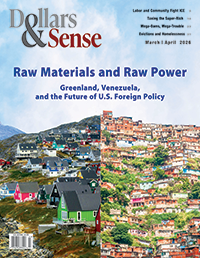
A little less than a week later, U.S. President Donald Trump began issuing a series of threats to invade Greenland, a sovereign territory of the nation of Denmark, a status to which the United States formally agreed in 1916 as a part of the purchase agreement to procure the Danish West Indies (now the U.S. Virgin Islands). By the time the World Economic Forum met in Davos, Switzerland, beginning on January 19, Denmark and Europe were threatening to dump their U.S. Treasury bond holdings in protest, and Trump ruled out the use of force (he continues to push Denmark for some kind of “deal” involving territorial concessions).
The logic of these recent U.S. foreign policy moves—there is indeed a logic to it, an illiberal logic that cares little for the “rules-based international order”—is perhaps best explained by John Mearsheimer, international relations scholar and proponent of the theory of “offensive realism,” who noted as follows in a 2023 article for Le Monde:
[G]reat-power politics is characterized by relentless security competition, where states not only look for opportunities to gain relative power, but also seek to prevent the balance of power from shifting against them. This latter behavior is called ‘balancing’, which can be done by building up one’s own power or forming an alliance against a dangerous opponent with other threatened states… Moreover, realist theory acknowledges that war is an acceptable instrument of statecraft and that states sometimes start wars to improve their strategic position. As Clausewitz argues, war is a continuation of politics by other means.
Acknowledging that the West doesn’t much care for his theory (liberalism is “privileged”), Mearsheimer further argues that the United States abandoned realism during its “unipolar moment” from 1991–2017 and instead “tried to create a global order based on the values of liberal democracy.” Mearsheimer writes: “Unfortunately, this strategy of ‘liberal hegemony’ was a near-total failure…Had American policymakers adopted a realist foreign policy after the cold war ended in 1989, the world would be considerably less dangerous today.”
It seems that the U.S. government now agrees. The Trump administration’s new foreign policy strategy heavily emphasizes reestablishing U.S. dominion over the Americas and “balancing” other great powers (especially China and Russia). In the specific cases of Venezuela and Greenland, this realpolitik involves reindustrialization (especially defense-industrial production), developing new suppliers and sources for the critical raw materials necessary to reindustrialize, and control over critical maritime transport routes in the Western Hemisphere deemed essential for U.S. trade and national security.
Mearsheimer argues that “The ideal situation for a great power is to be a regional hegemon—to dominate its area of the world—while making sure that no other power, medium or great, is able to challenge it.”
The most recent U.S. National Security Strategy published in November 2025 reads as a less-eloquently-argued but faithful application of Mearsheimer’s offensive realism (even so, Mearsheimer himself has been highly critical of the U.S. behavior vis-à-vis Russia and Iran):
After the end of the Cold War, American foreign policy elites convinced themselves that permanent American domination of the entire world was in the best interests of our country … They placed hugely misguided and destructive bets on globalism and so-called “free trade” that hollowed out the very middle class and industrial base on which American economic and military preeminence depend.
The document goes on to articulate a foreign policy strategy focused on U.S. dominance in the Western Hemisphere, deemed a “Trump Corollary” to the Monroe Doctrine, now being called the “Donroe Doctrine.” Recall that the original 19th-century Monroe Doctrine oriented U.S. foreign policy toward maintaining order, facilitating trade, and keeping foreign powers and influences out of its sphere of influence.
The U.S. National Defense Strategy, published by the Department of War on January 23, 2026, discusses the particular significance of Venezuela and Greenland, noting the growing influence of great power rivals across the Western Hemisphere:
But the wisdom of [the Monroe Doctrine] was lost, as we took our dominant position for granted even as it started to slip away. As a result, we have seen adversaries’ influence grow from Greenland in the Arctic to the Gulf of America, the Panama Canal, and locations farther south.
The jokey name aside, the “Donroe Doctrine” seems a fitting characterization. In 1823, when U.S. President James Monroe devised the strategy, the United States was a weak agricultural backwater with a small navy and financial problems trying to industrialize in an international environment dominated by great powers in Europe and Asia. Today, the United States is a weakening service-economy backwater with an outdated military and lots of debt struggling to reindustrialize in a highly competitive international environment dominated by great powers in Europe and Asia.
In the realist tradition, scholars often differentiate between “hard” and “soft” power. In the cases of Venezuela and Greenland, the United States is arguably sacrificing soft power resources for hard power gains. Specifically, the United States is giving up some of its international reputation and political capital among traditional allies to gain greater control over the resources, trade routes, and supply chains deemed necessary to strengthen the United States at the expense of its great power rivals (in the realist tradition, the international system is understood as a zero-sum game in which power is relative; your loss is my gain and vice versa).
Geography and geology matter a lot in this context. While Venezuela and Greenland certainly differ along many lines—culture, climate, history, political status, and so on—what they share is more important analytically than what they do not. Crucially, both are resource-rich, proximate to critical global transport and logistics routes, located in the Western Hemisphere, and vulnerable to Chinese and Russian influence.
Over the past three decades, Russia and China have made major inroads into the Americas, ones that the United States seems to have mostly ignored until recently. Among other feats, since 2000, China has: become South America’s largest trading partner (as of 2024); signed free trade agreements with Chile, Costa Rica, Ecuador, Nicaragua, and Peru; and in 2024 alone, invested over $14 billion directly into private enterprises in the Americas, with a heavy emphasis on infrastructure projects, heavy machinery manufacturing, and agriculture. In November 2024, Peru opened its first deep-water port in Chancay, financed by China and intended to become a trade and re-export hub for the region.
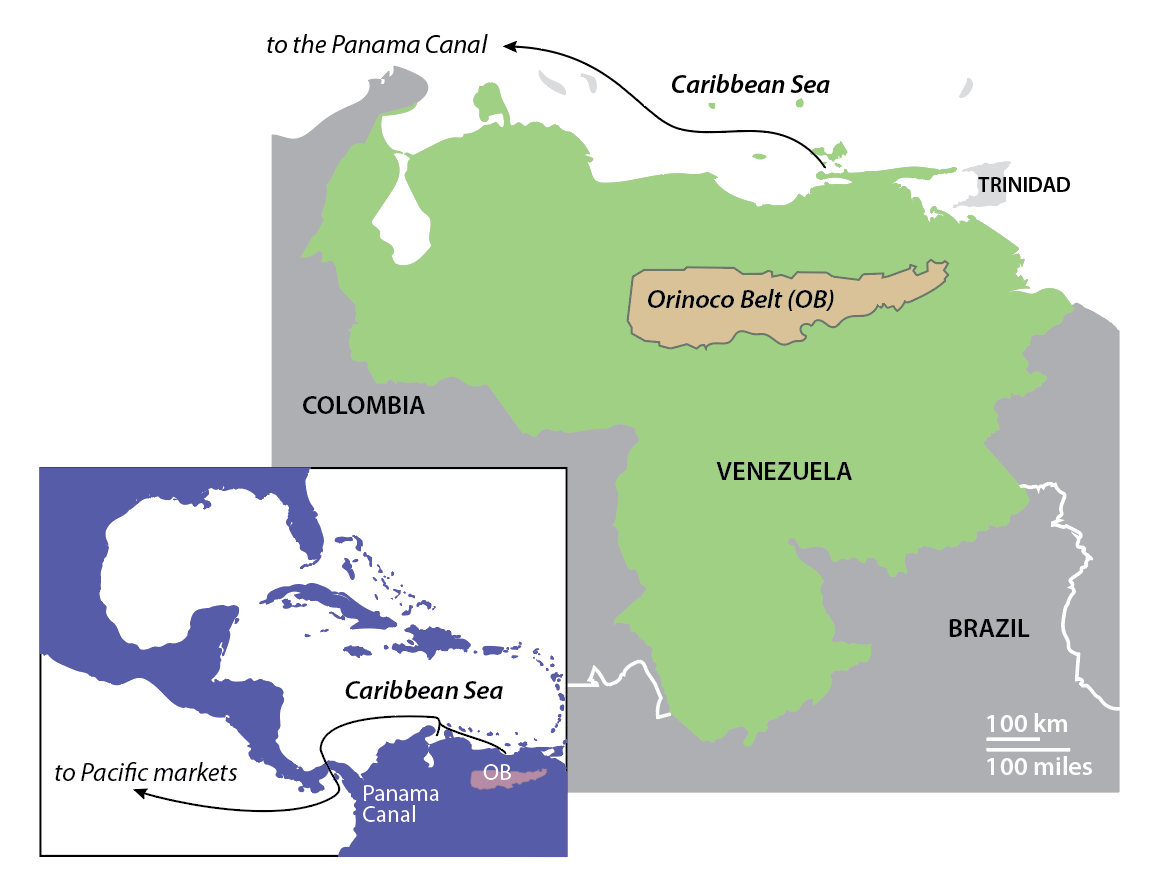
Shortly after Chancay opened—and apparently irked by China’s growing hold on Latin American trade—President-elect Donald Trump threatened to “take back” control of the Panama Canal, through which 40% of U.S.-bound container vessels travel and which is partly operated by Hong Kong-based CK Hutchison Holdings. “The U.S. Southern Command, a branch of the Department of Defense, has warned officials about China’s growing influence within Latin America’s industries and logistics infrastructure,” Glenn Taylor reported in Yahoo News’s Sourcing Journal. As you can see in the map above, Venezuela is close to the Panama Canal. Taylor quotes Kyle Peacock, principal at the international trade consultancy Peacock Tariff Consulting:
The U.S. operation [in Venezuela] doesn’t change the canal operations, but it raises the canal’s strategic importance … The U.S. acted in Panama in 1989 to protect the canal and acted in Venezuela now to secure regional assets. That parallel signals renewed U.S. focus on Western Hemisphere chokepoints, more scrutiny of foreign influence near the canal, and tighter U.S.-Panama security alignment.
The map also depicts the Orinoco Belt, the region of Venezuela where oil is extracted. The Belt region includes La Luna–Quercual Total Petroleum System on the eastern side, which contains an estimated one trillion barrels of heavy oil, and overlaps with the Guiana Shield, a region of geological interest owing to its suspected mineral wealth. While estimates vary considerably, reports from the U.S. Geological Survey (USGS) indicate substantial reserves of oil, gold, diamonds, iron, aluminum, manganese, tin, rare earth minerals (niobium, tantalum), uranium, molybdenum, titanium, and platinum. A 2014 report from the USGS subtly references policy changes in Venezuela that “have made Venezuela
a more difficult place to invest for U.S. and Canadian companies, while investment by Chinese entities has been encouraged.”
Concerns over Chinese investment in Latin America aren’t just about territory and trade routes, but also about securing supplies of raw materials required for the production of arms and munitions, as well as advanced technologies associated with what observers deem the “fourth industrial revolution” (because it comes after the First (mechanization), second (factory production), and third (digital) industrial revolutions). Former chairman of the World Economic Forum Klaus Schwab, who coined the term, notes the broad scope of associated technological developments, “The fourth industrial revolution, however, is not only about smart and connected machines and systems. Its scope is much wider. Occurring simultaneously are waves of further breakthroughs in areas ranging from gene sequencing to nanotechnology, from renewables to quantum computing.”
Some of these technologies—like precision drones and artificial intelligence—are already making a big impact on military strategy and tactics (for example in the Ukraine War), underscoring the perceived urgency around modern technology production and advancement, which require boatloads of industrial metals and minerals, as well as a lot of energy. It is no exaggeration to say that a global race for energy, metals, and minerals is underway, with industrial powers competing ruthlessly for control of the commodities necessary for 21st century dominance. The U.S. government, first under President Joe Biden and then under President Trump, has been creating and updating lists of critical metals and minerals deemed strategic priorities for the defense industry—commodities that are in short supply in the United States, not produced domestically, or both.
Decades of free trade and outsourcing of production has rendered the United States largely dependent on imports for a variety of raw materials, parts, and components required for defense-industrial production. China and Russia are major producers, processors, exporters, and often importers of many of these critical items. For example, China utterly dominates global solar panel fabrication: “China’s share in all the manufacturing stages of solar panels (such as polysilicon, ingots, wafers, cells and modules) exceeds 80%,” noted the International Energy Agency in 2024. All these production stages involve extensive use of a wide variety of critical metals and minerals.
As another example, China enjoys a near monopoly on global supplies of raw gallium, a critical input into semiconductor manufacturing. In 2022, 98% of raw gallium was sourced from China owing to its dominance in aluminum refining, of which gallium is a byproduct. China also controls roughly half of the world’s proven tungsten reserves, produced over 80% of global supplies in 2023, and is the world’s largest exporter, ahead of Vietnam and Russia, among other producers. Among other applications, tungsten is used in military-grade steel production, aerospace components, munitions, and ground vehicle armor.
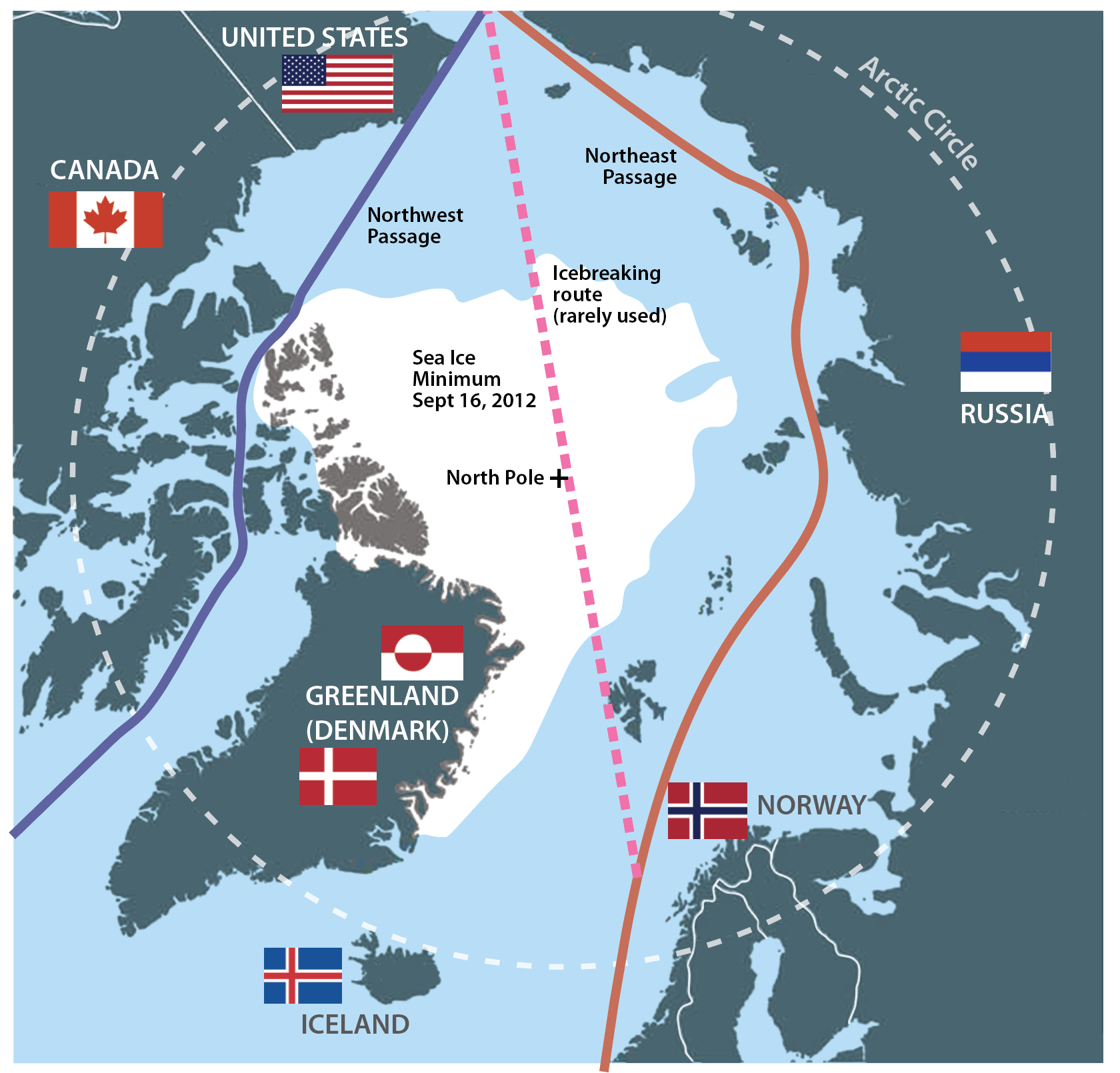
Thousands of miles to the north, a similar set of constraints and imperatives present themselves in thinking about Greenland. Russia is currently the only great power besides the United States bordering the Arctic Circle, with Canada, Norway, and Denmark (via Greenland) occupying the rest of the territory that enjoys direct access to the Arctic Ocean. There are two trade routes that cross the ocean and are currently used for part of the year (the Northwest and Northeast Passages), and then a third, more direct, Transpolar Sea Route that will likely become regularly available as glacial melt proceeds and higher average temperatures are sustained (it is only rarely used today owing to permanent sea ice).
Russia has been active in the Arctic region since at least the 16th century, when a commercial trade route through the Arctic was first established to connect fur-trading outposts in Siberia. In 1728, Vitus Bering, a Danish officer in the Russian Navy, set sail to explore the geography of what we now call the Bering Strait, the body of water that separates Alaska and Russia. The Great Northern Expedition of 1733–1743—also commanded by Bering, and which Encyclopedia Britannica describes as an “operation that to the present day has had no equal in the history of polar exploration”—continued to explore and map the Arctic Circle. By the mid-17th century, the Northeast Passage, pictured on the map below, was being regularly used for trade.
According to a 2024 report from the European Council on Foreign Relations, Russian President Vladimir Putin, who likes to publicly compare himself to Peter the Great, has similarly ambitious plans for the Arctic: “By September 2022,” he declared “the Far East and the Arctic are the regions where Russia’s future lies.” The Kremlin then began using the term “osvoenie,” meaning “development” or “mastery,” to frame its Arctic ambitions, echoing the narratives of imperial and Soviet expansion. Russia’s 2023 Foreign Policy Concept, similar to official U.S. foreign policy strategy documents, listed the Arctic as Russia’s second most important strategic priority, behind its relations with post-Soviet states (including Ukraine). The authors note that the “Kremlin’s Arctic ambitions have grown partly in response to signals from Washington. U.S. President Donald Trump’s sights on Greenland were interpreted in Moscow as a sign of growing geopolitical competition in the region.”
Importantly, Russia and China, which have been cooperating for over a decade in the Arctic, have conducted a series of joint military exercises, causing additional concern among U.S. officials in Washington, D.C. China also sent three icebreakers to the Arctic Ocean in 2024, the first such occurrence. On January 23, 2026, Russian state media outlet TASS published an article touting Putin’s plans to build a Trans-Arctic Transport Corridor to “consolidate industrial exports from Russian enterprises in the Urals, Arctic, and Siberia through the waters of the Northern Sea Route to consumers in the Asian region.” The article also reiterates Russia’s long-standing offer to cooperate with the United States on Arctic matters.
In addition to counterbalancing Russian and Chinese power in the Arctic, also important to the United States is the future potential for trade via the Northwest Passage (see map), a route that runs through Canada’s Arctic Archipelago and is expected to eventually replace reliance on the Suez Canal for container shipping. Writing for Canada’s National Observer, Supriya Dwivedi notes that Canadians are concerned that the United States will try to “grab” the Northwest Passage, which has “been a point of contention between Canada and the US for decades, with the US claiming the waters to be international while Canada—rightfully in this author’s opinion—claims the waters to be Canadian.”
Greenland promises the United States additional hard power gains should it succeed in gaining a larger foothold on the island. According to data from the USGS and the Geological Survey of Denmark and Greenland, Greenland has potentially large reserves of the following energy, metal, and mineral commodities, many of which are now deemed “critical” by the U.S. government: oil, natural gas, gold, iron, zinc, lead, silver, copper, antimony, baryte, beryllium, chromium (a rare earth element), feldspar, fluorite, graphite, hafnium, lithium, and molybdenum.
The United States’ “unipolar moment”—the period during which the U.S. enjoyed global superpower status with no serious rivals—is over; the international system is now “multipolar” and the United States exists in a world in which it has to compete aggressively with other great powers. The multipolar international system that replaced British hegemony in the 19th century lasted for almost 70 years, roughly from 1880 to 1945, and included both world wars. Odds are that the great power competitions we see emerging in U.S. foreign policy will be with us for some time. It is also likely that other great powers will move to counterbalance the United States with surprising foreign policy decisions of their own. The dynamics Mearsheimer outlines indicate that there is probably more to come. Personally, I am keeping a very close eye on developments in Cuba, Mexico, Iran, Taiwan, Ukraine, the Balkans, Nigeria, and the Philippines, among other locations of strategic significance that may ultimately get drawn in.
But no matter how closely a government adheres to it, a single theory can only ever provide a partial and narrow view of the world, and the world we live in is more complex than the international system realism describes. While it excels in describing and predicting the behaviors of great powers, realism struggles to understand the other forms power takes and other ways it can be wielded.
The theory thus accounts poorly for complex economic interdependence, the webs of trade and finance that came to bind national markets and economies to one another during the United States’ “unipolar moment,” making it harder for nations to be fully “sovereign.” For example, realism can’t explain the power of globalized bond markets and how they provided a conduit through which U.S. foreign policy could be tamed by foreign investors. U.S. bond yields spiked on the Greenland invasion threat, prompting Trump to back off and shift towards negotiating a purchase instead.
Realism fails to account for nonstate actors and the ways concentrated capital influences the exercise of state power. So, it overlooks the power of the U.S. multinationals that stand to benefit mightily from these acts of imperial aggression. In the world realism theorizes, there is no Chevron, no Exxon, no BlackRock, no Raytheon backing and profiting from the government’s power plays.
Finally, realism understands the state as a monolith, a mere container for the “national interest,” whatever that vague phrase means. In other words, it doesn’t account for us, it doesn’t see society, it doesn’t see class, it doesn’t see how we can organize, how we can push back, how we can stand up for one another, which we obviously must. Not all powers are big and Great. As Bob Marley once said, “If you are the big tree, we are the small axe.”
Sources: Shaheer Ahmad, “Military Strategy in an Era of the Fourth Industrial Revolution,” Modern Diplomacy, November 5, 2024 (moderndiplomacy.eu): Arctic Century, “The Trans-Arctic Transport Corridor,” Arctic Century, n.d. (arcticcentury.org); “The Northwest Passage Has the Potential to Disrupt Global Trade — but There’s a Catch,” Arctic Today, n.d. (arctictoday.com); Associated Press, “Venezuela Oil Tanker, U.S. Military, and Trump Administration Tensions,” Associated Press, 2026 (apnews.com); Sasha Breger Bush, “Accounting for Structural Change in Climate Policy Research: Lessons from Global Commodities Markets,” Review of Policy Research, July 2025 (doi.org/10.1111/ropr.70024); “Early Russian Exploration of the Arctic,” Britannica, n.d. (britannica.com); CNN, “Minerals, Rare Earths, and Oil Shape Venezuela’s Economic Future,” CNN, 2026 (cnn.com); “The Bear Beneath the Ice: Russia’s Ambitions in the Arctic,” European Council on Foreign Relations, n.d. (ecfr.eu); Executive Intelligence Review, “Rosatom Integrates Greenland into an Arctic Transport Circle,” Executive Intelligence Review, 2026 (eir.news); Katherine Faulders, Aaron Katersky, and Devin Brennan, “Nicolás Maduro Declares ‘I Am Innocent’ and ‘Still President’ in Manhattan Court Appearance,” ABC 7 New York, January 5, 2026 (abc7ny.com); Geological Survey of Denmark and Greenland (GEUS), Critical Raw Material Resources in Greenland (Geology & Ore No. 34), Geological Survey of Denmark and Greenland (2023); “Why Venezuelan Crude Oil Appeals to U.S. Refineries,” The Guardian, 2026 (theguardian.com); “The 1951 Agreement Allowing U.S. Military Presence in Greenland,” History Channel, n.d. (history.com). IPEwithSBB, “January 13, 2023 Global News Roundup,” IPEwithSBB, 2023 (ipewithsbb.substack.com); Sasha Breger Bush, “December 1, 2023 Global News Roundup,” IPEwithSBB, 2023 (ipewithsbb.substack.com); Sasha Breger Bush, “February 13, 2025 Global News Roundup,” IPEwithSBB, 2025 (ipewithsbb.substack.com); “Venezuela Political and Economic Developments,” Miami Herald, 2026 (miamiherald.com); “Venezuela’s Oil and Mining Potential Constrained by Weak Infrastructure,” Mining Reporters, 2026 (miningreporters.com); “Great Powers and the Remaking of Global Order,” Monde Diplomatique, 2023 (mondediplo.com); “Why Greenland Is Strategically Important for Arctic Security,” NBC Chicago, 2026 (nbcchicago.com); “Putin Invokes Tsar Peter the Great in Justifying Russian Imperial Ambitions,” NBC News, 2022 (nbcnews.com); “Six Things to Know About Trump’s Obsession with Greenland,” Politico, 2026 (politico.com); “Trump Increases Pressure Over Greenland, Rules Out Force,” RealClearPolitics, 2026 (realclearpolitics.com); “U.S. Oil Capital Houston Buzzes as Venezuela Oil Rush Looms,” Reuters, January 26, 2026 (reuters.com); “Venezuelan Oil Industry Struggles with Decaying Infrastructure Despite Vast Reserves,” Reuters, January 3, 2026 (reuters.com); Christopher Schenk et al., An Estimate of Recoverable Heavy Oil Resources of the Orinoco Oil Belt, Venezuela (USGS Fact Sheet 2009–3028), U.S. Geological Survey (2009); Klaus Schwab, The Fourth Industrial Revolution, Crown Business (2017); “Economic Developments Related to Arctic Trade Routes,” TASS, 2026 (tass.com); “Maduro, Trump, and Growing Tensions over Panama and Venezuela,” Time, 2026 (time.com); U.S. Department of War, 2026 National Defense Strategy, January 23, 2026 (media.defense.gov); 2025 National Security Strategy of the United States, White House (2025); “Why Trump’s Venezuela Operation Is Putting Pressure on Regional Politics,” Yahoo News, 2026 (yahoo.com).

Mitt Romney’s call to tax the rich like him renders the Wall Street Journal editors apoplectic.
